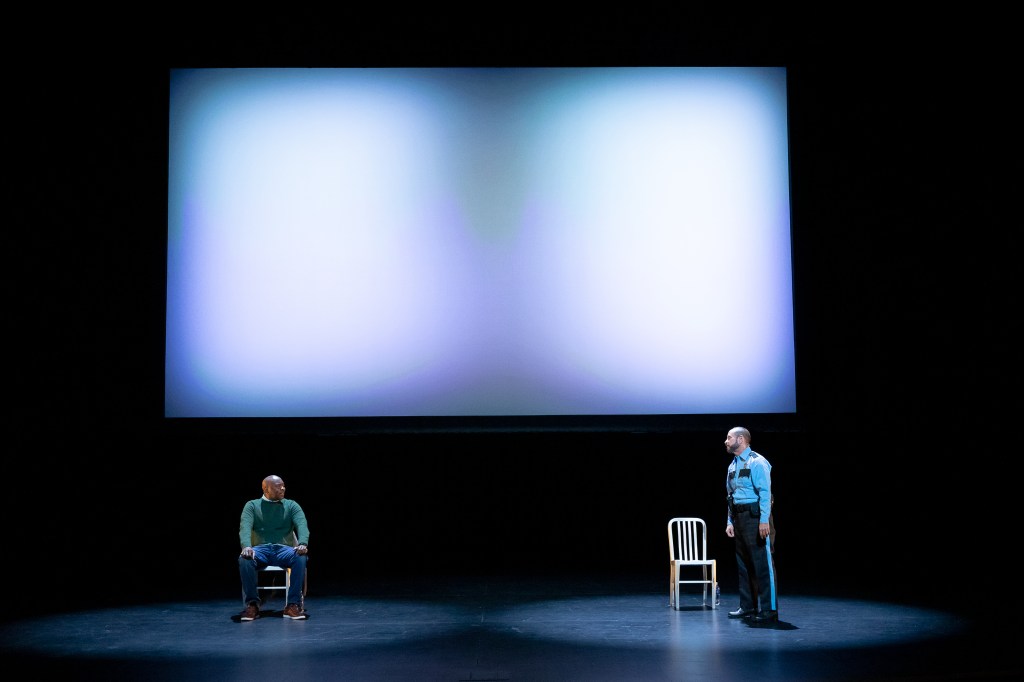
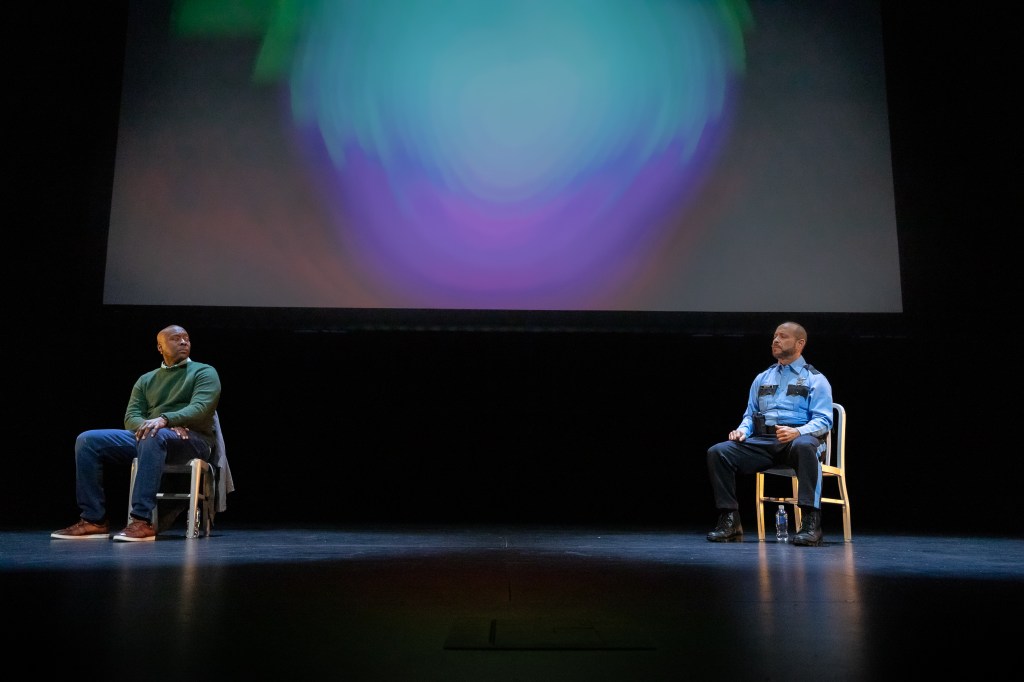
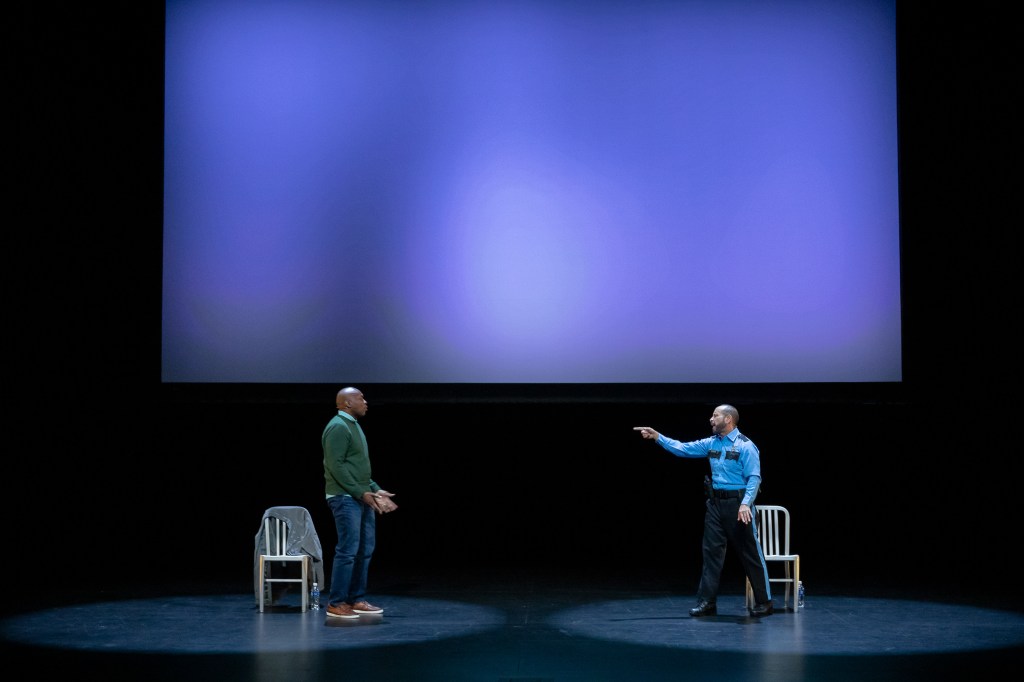
The Red Door Project is an award-winning nonprofit “leveraging the arts to bridge the divide between the public and law enforcement.” My video and sound design for this theater piece combined abstracted backgrounds, musical elements, and soundscapes with preexisting video monologues. Blurred amorphous shapes create an environment for the two actors onstage. During intense moments, the forms become more dynamic – cutting, shifting, and flashing. Character’s stories are punctuated with subtle tones and brought into emotional reality with carefully layered sound effects.
Reser Center for the Arts, Beaverton, OR Feb. 23 – 24, 2024
A generative, six-speaker sound installation. Three doorways with two-way mirrors display three rooms filled with saturated color and sound. Each room contains a set of rich tones joined by subtle field recordings of wind, ice and birds. Chords rhythmically pulse and shift in ever-changing patterns, while the effects of unfiltered color play with the eyes. As listeners open and close doors, moving through the spaces, different elements of the layered composition are revealed.
With 7,000 individual LED bulbs and 8.2 channel audio, Unknown Atmospheres is a room-sized immersive light and sound installation. A fully-mirrored wall reflects everything in reverse, while flickering, flashing and pulsing shapes play in precise synchrony to an electronic surround-sound composition. Within a 5-minute loop, six different scenes follow each other in a series of cinematic hard-cuts, each scene a new landscape of sound and form. Visitors are invited to experience from the outside or to enter the piece and wander among the matrix.
Created in collaboration with Parallel Studio, light programming by Jesse Mejia.
A 16-channel generative, site-specific composition, this collaboration with sculptor Philip Krohn was installed on the banks of the Willamette River for six weeks during the summer of 2022. Visitors traveled through a 300-meter long boardwalk of undulating wooden forms, woven from salvaged strips and lashed with recycled inner tubes. Beyond the boardwalk, a path led to a grassy point perched on the river, where a 50-foot diameter wooden bench sat among blackberries and wildflowers. Emerging from the bench itself, pings, chirps, tones and waves arced across the air. In ever-changing combinations, these electronic calls, whistles and roars mimicked and played with already-occurring elements of the densely-populated site, such as highway traffic, train rumble, birds, crickets, and the shouts of dragonboat crews.
The installation technology was completely unseen, with vibrations sent directly into the bench by 16 equally-spaced transducers. Audio panning behaviors ranged from slow pulses to random scatterings and audio-rate circling. From the center of the circle, the complex acoustics of each uniquely resonant soundboard created a virtual sonic theater, held among and within the existing soundscape. Lower frequencies and vibrations could be experienced through the body when seated, revealing a new sensorial layer. The generative composition wafted and waned, new voices and combinations emerging gradually. The site also served as a space for musical performances, and several musicians chose to improvise with the sounds of the installation.
My original sound score for this dance piece reflected the wildly divergent approaches in the two halves (or “worlds”). In the first, sonic fragments were culled from a long list of movie scenes, old television commercials, YouTube videos, pop songs, nursery rhymes etc., gathered by the dancers. These short bursts of micro-edited media were synced to precise cues – shards of not-quite recognizable sonic detritus colliding with elaborate onstage recitations.
After an interlude/scene change (performed by the dancers to a stripped-down rhythmic track) the strategy changed completely. Within an all-white set, the dancers followed a loose improvisational score, adjusting plants, holding positions and speaking words. Each dancer approached a microphone to ring a bell or click stones and speak. I altered and mixed the dancer’s sounds, creating loops within loops. To this, I added a sparse backing of pure tones.
This experimental, interactive theater piece was created by the cast, based on dozens of interviews with current and former residents of communes in the Pacific NW. My sound score used only the sounds of the human voice – from chanting, singing and toning to whispering, hissing and glossolalia. Vocal recordings were sampled, looped, filtered and processed to create a wide range of textures, from shimmering drones to New Age melodies, at times merging with the live voices of the actors. Tones emerged from a glowing “sound box” in the middle of the performance area and expanded out to fill the room on a four-channel system.
I accompanied Bill Will’s exhibition of kinetic sculptures Fun House with a four-channel generative sound installation. An extensive library of individual sound events were randomly triggered and dynamically spatialized throughout the gallery in ever-changing combinations. Sound events ranged in length from a few seconds to several minutes and were all derived from the sound of a single snare drum hit – from quiet buzzing and drones to rumbles and pops. Sudden bursts of sound emerged from silences. As visitors activated the noisy sculptures, the installation provided a parallel sonic environment.
Ronna & Eric Hoffman Gallery of Contemporary Art at Lewis & Clark, Portland OR
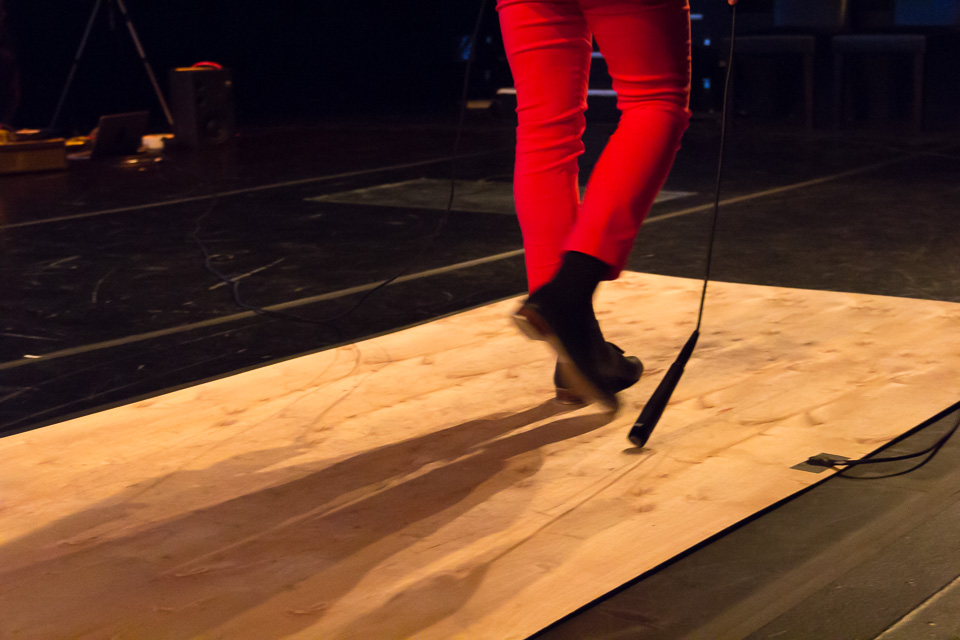
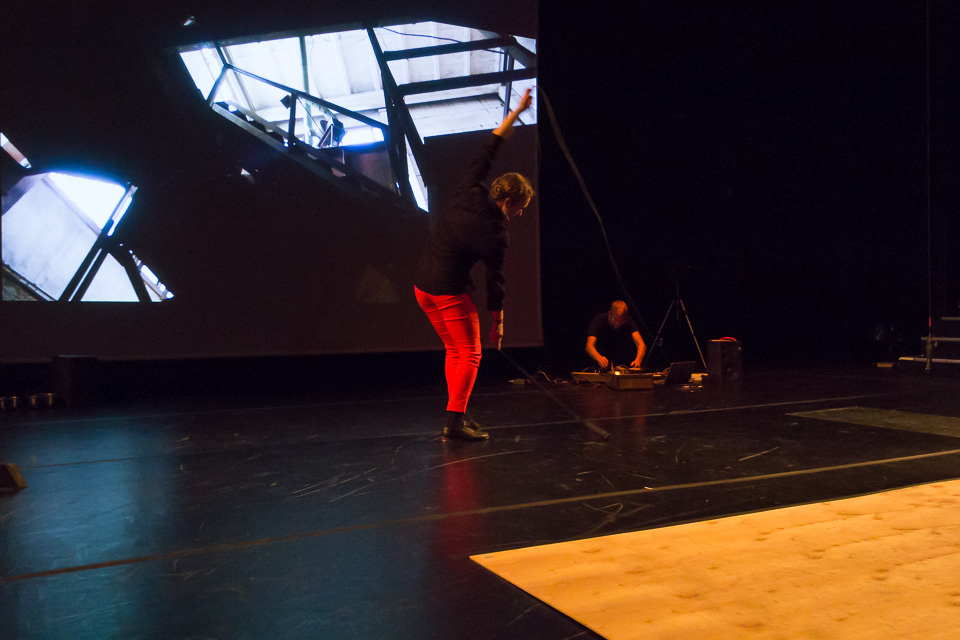
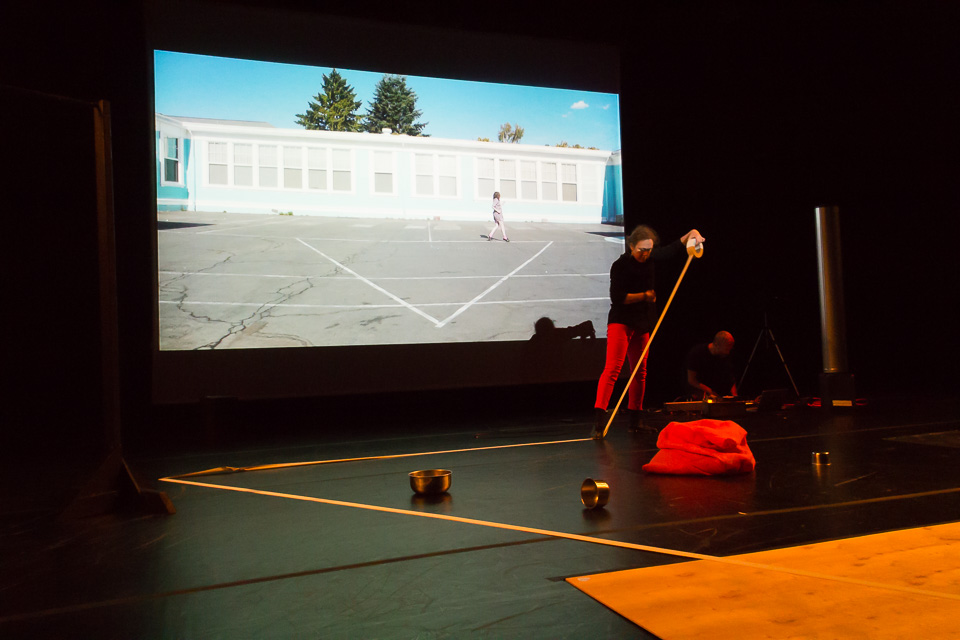
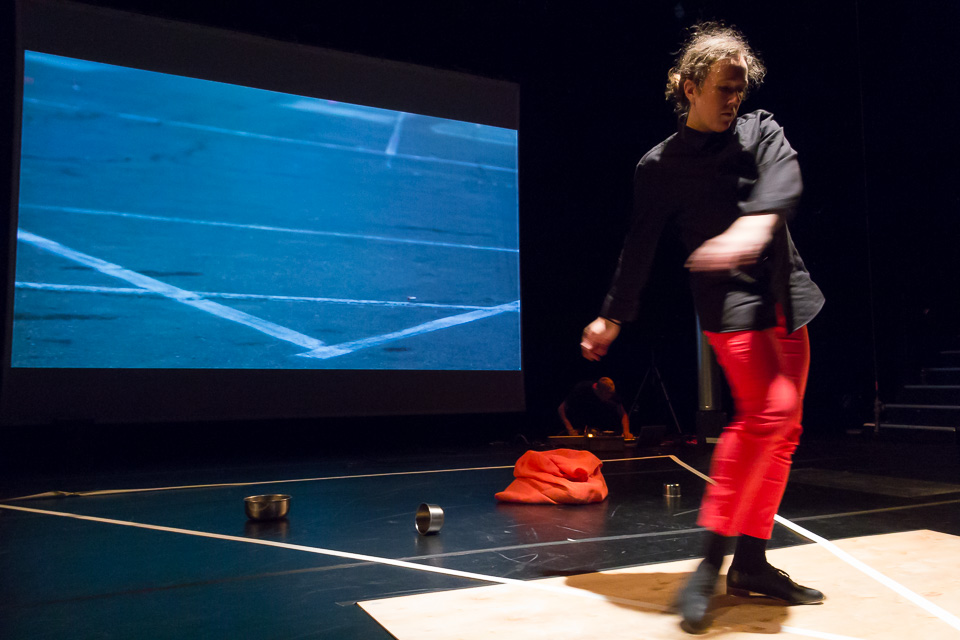
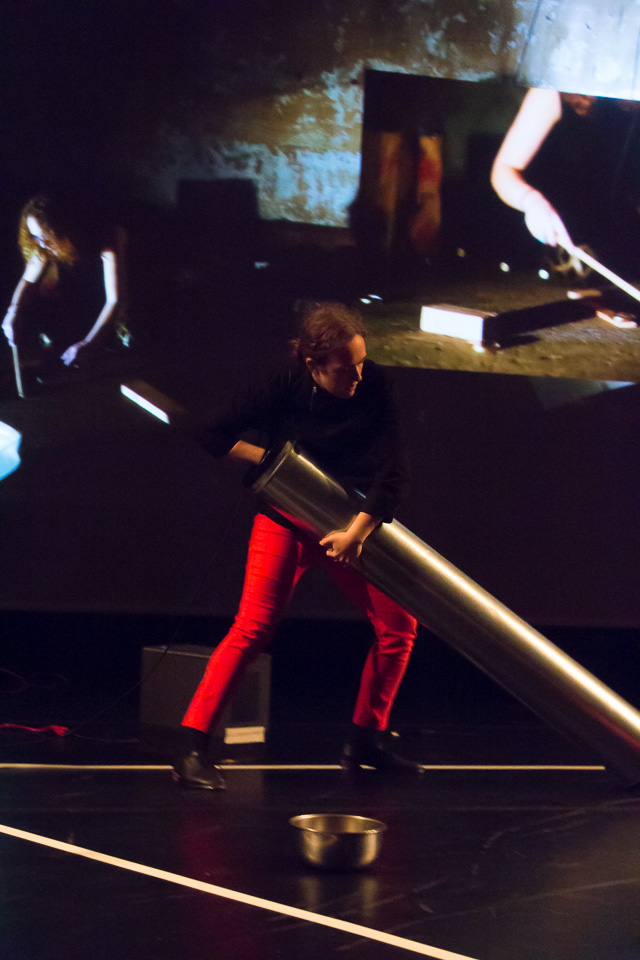
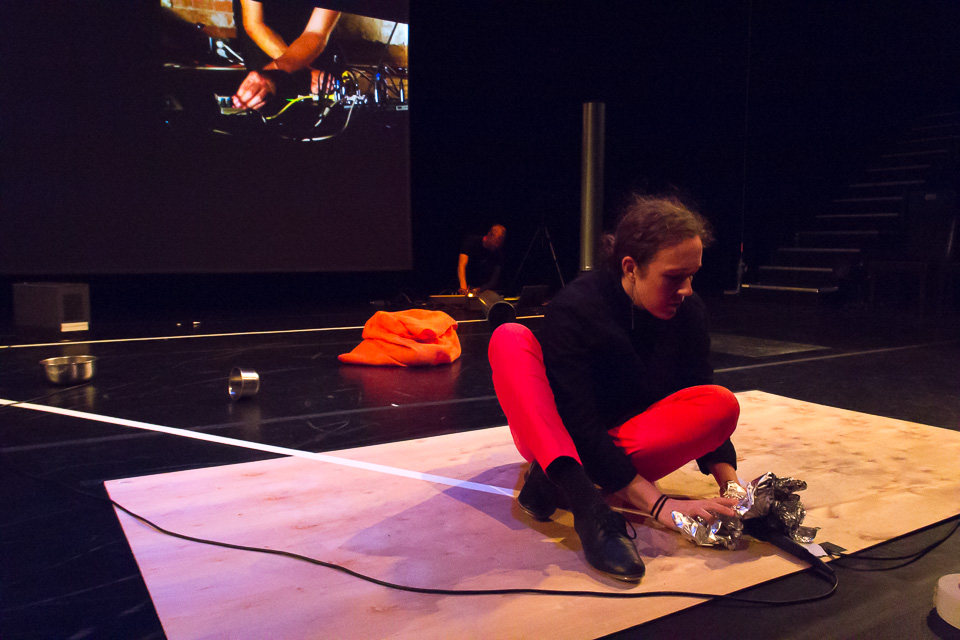
SNKR was a collaborative project with movement and video artist Kelly Rauer, resulting in videos, sounds, performances and hybrid combinations thereof.
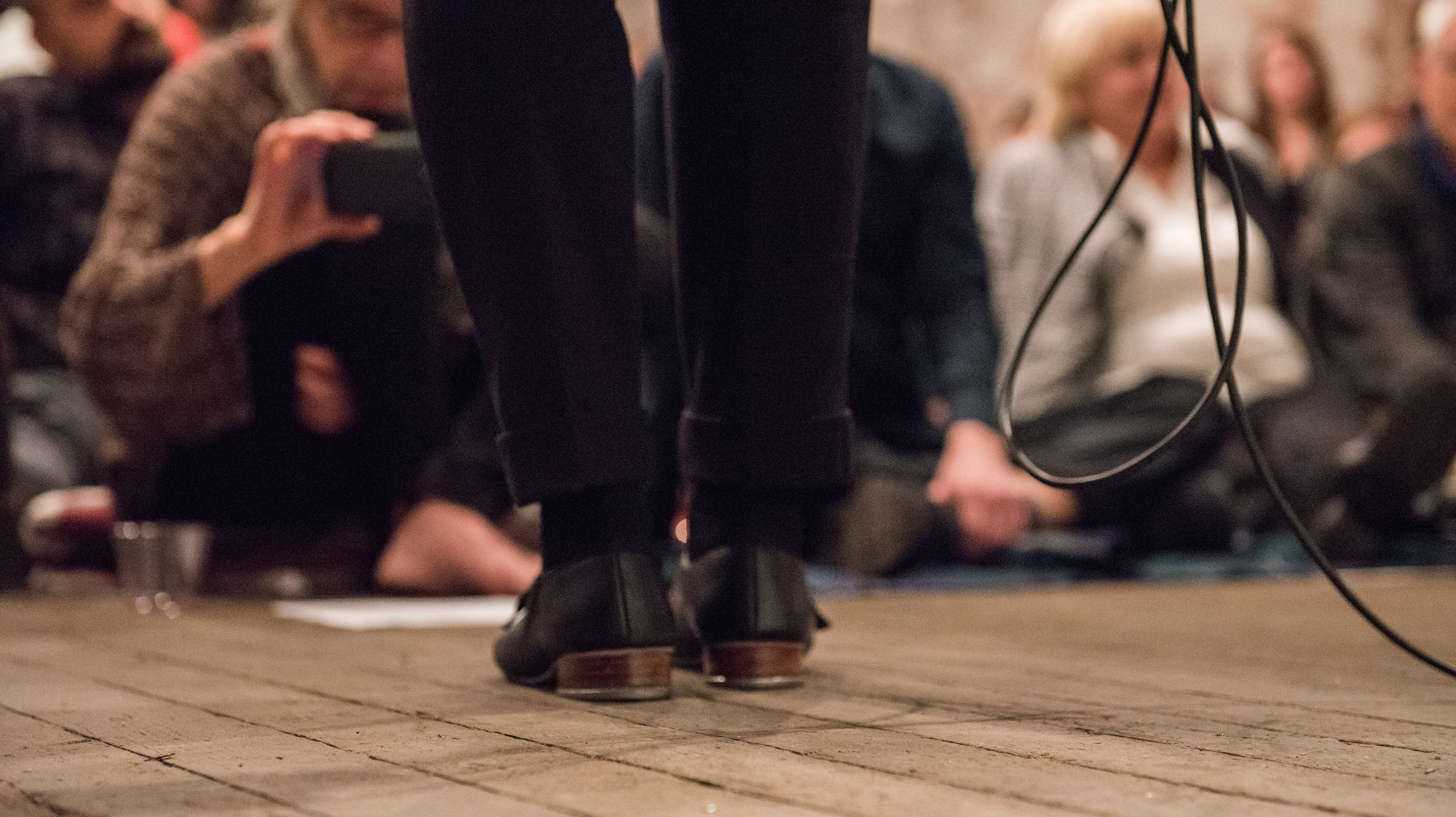
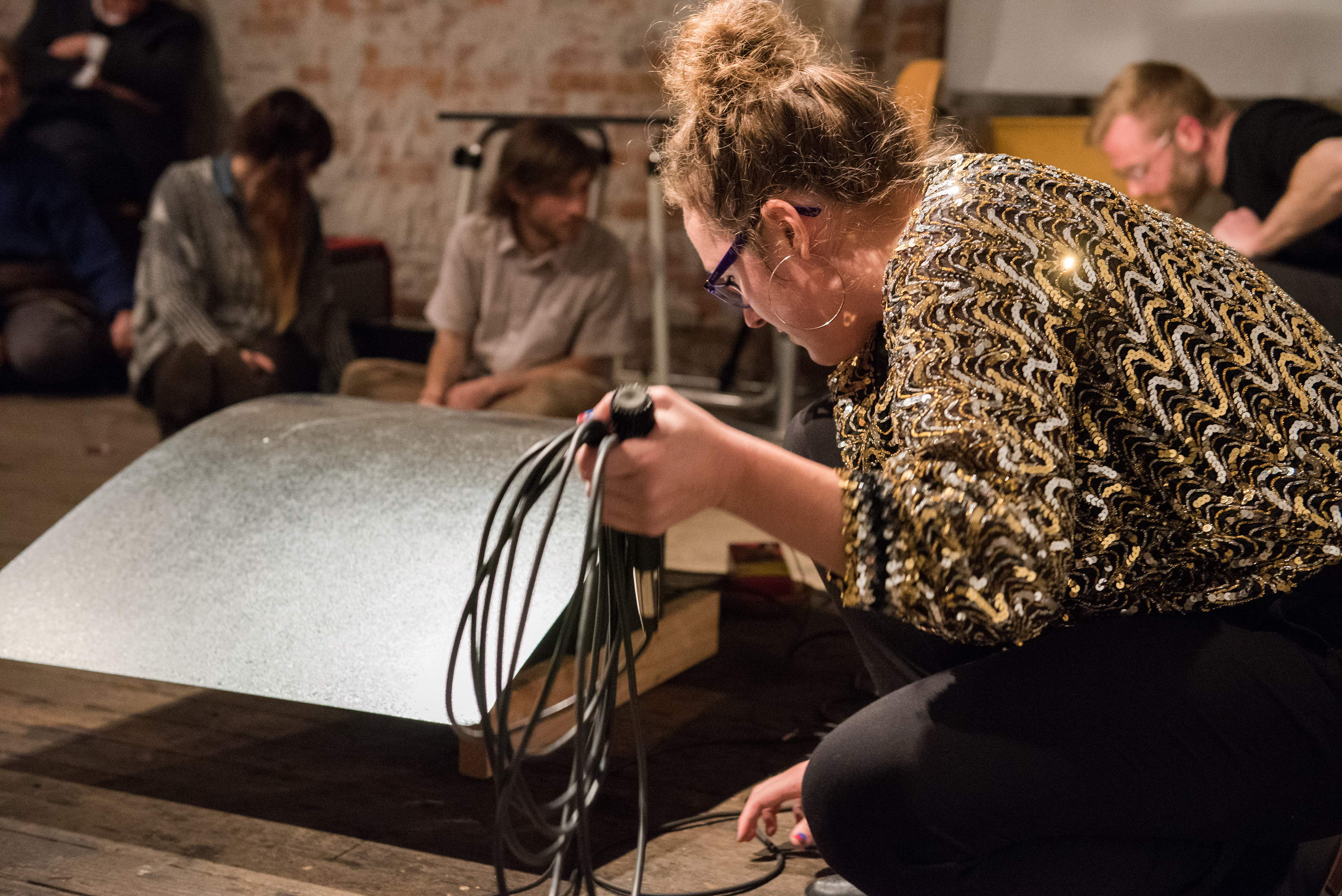
SNKR began with a two-minute performance using tap shoes and acoustic feedback through a large resonating metal sheet.
That experiment led to the capturing of improvisational performances for camera in various Portland locations – sounding out spaces with tap shoes, framing found geometries. The resulting footage was edited for sound as much as image, creating repetitions, stutters, rhythms and glitches. An accompanying score was created entirely from processed samples of two degraded vinyl LPs.
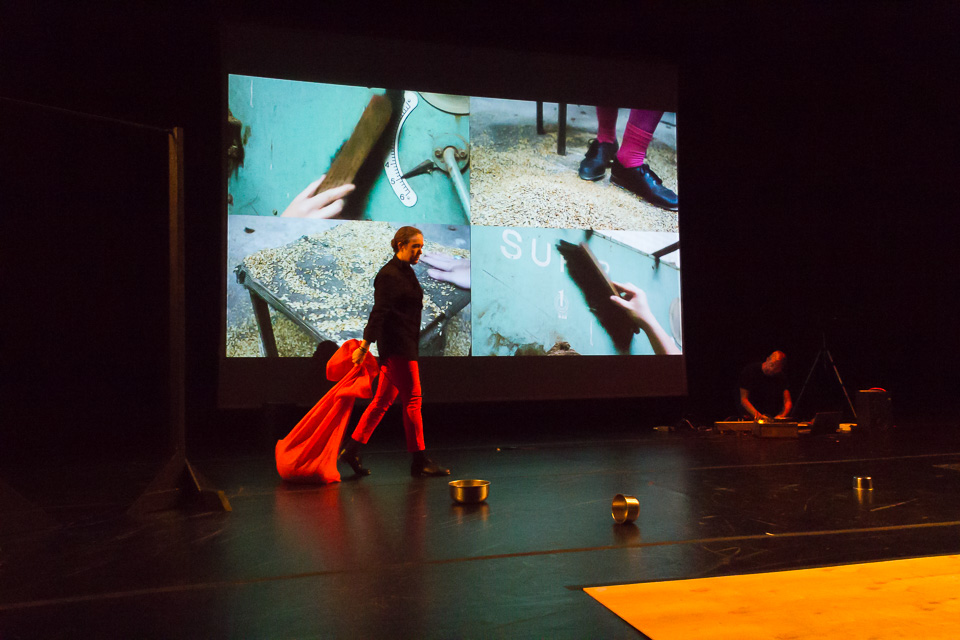
Further improvisations for camera included a three-camera shoot in Portland’s oldest building using no-input mixer, acoustic feedback, effects pedals and amplified small objects, and movements inside an unused, Soviet-era grain mill in Estonia, with its multiple levels of turquoise machinery.
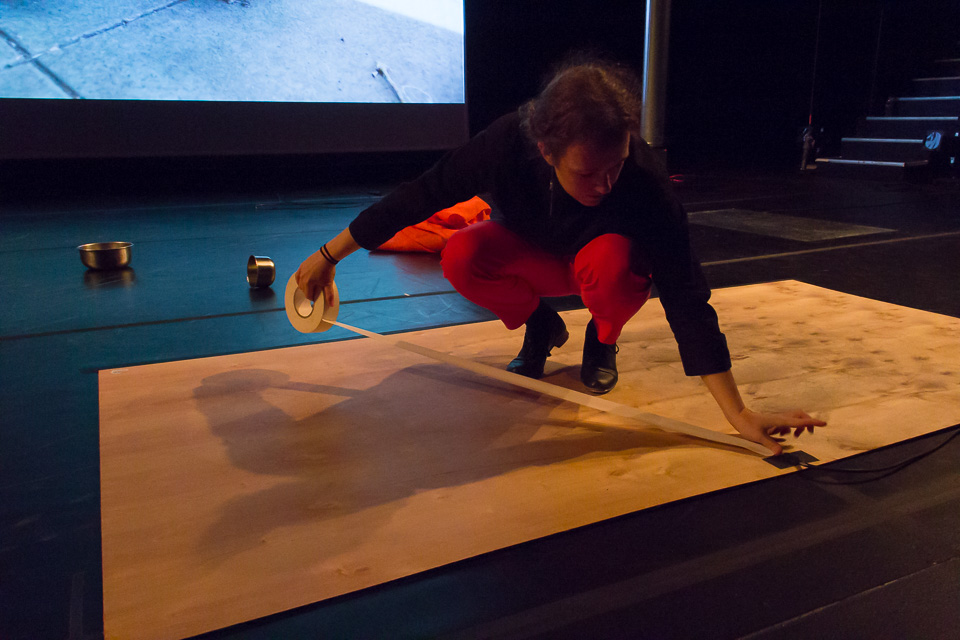
These videos were incorporated into a 20-minute performance at the Risk/Reward Festival in 2016. Against a large video projection, Rauer created on-stage shapes, moving sound-making objects and speakers, and arranging items in task-based sequences. At the back of the stage, I created, mixed and processed sounds, including samples, contact microphones, acoustic feedback and a record player. Near the end, a large-screen television was rolled onstage, displaying a live video feed of my hands.
My sound design for this theatrical reimagining of Gus VanSant’s “My Own Private Idaho” combined remixes of original music by Peter Holmstrom (Dandy Warhols) with layered environmental and atmospheric sound. Scenes in present time were joined by soft tones coming from hidden onstage speakers. As characters slipped into the past, remembered spaces emerged from a four-speaker system surrounding the audience. Microphones suspended above the stage added reverb effects to the actor’s voices at key moments.



 Seth Nehil